
Little Green Light is a cloud-based donor management system for fundraisers.
Subscribe to get our latest product updates, best practices and tips to grow your nonprofit.
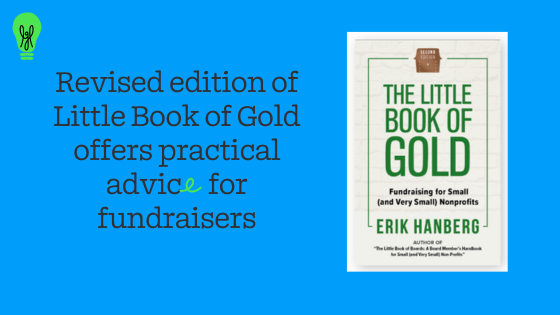
It’s challenging for fundraisers to find fundraising advice targeted at small (and very small) organizations. This is what makes The Little Book of Gold by Erik Hanberg such a valuable resource. It’s a slim but information-packed book that offers clear, realistic steps small organizations can use to fundraise effectively. It was originally published in 2011, but Erik recently released a revised and expanded edition, making it even more relevant for fundraisers today. We’re fans of the original, so we spoke with Erik about this new edition and we’ve summarized our conversation here.
It was an email from a reader, asking what Erik would change if he were writing The Little Book of Gold now, that led him to release a new version. The question prompted Erik to revise and expand the book to address:
Technology was the reason for the updated edition. But during the process of revising The Little Book of Gold, Erik was surprised by the extent to which its original principles remain sound and effective, even years later. Though the tactics have evolved, Erik finds that nonprofits that are able to consistently fundraise effectively over time share the following commonalities:
For example, shortly after a successful fundraising event, they debrief on what went well and what they would like to see perform better, and they set a calendar reminder for the next year on when to start working on that year’s upcoming event. This allows them to capture their success as they move forward.
Professional fundraising means that nonprofit leaders know who gave them money, when, how, for what, and maybe even why. And they know how to reach out again to make another ask. This is virtually impossible without a database to track everything.
Staff turnover makes sustained fundraising hard, and it’s particularly challenging at small nonprofits, where low pay and long hours are sadly far too common. Organizations that invest in their staff are more likely to succeed year over year, instead of starting from scratch with each new hire.
Conclusion
The revised and expanded edition of The Little Book of Gold offers practical, actionable advice that guides fundraisers to prioritize development efforts that best serve their unique organization. When fundraisers focus their efforts, rather than getting pulled in too many directions, it leads to better results for the organization.
As Erik says, “I hope readers will see that fundraising is not just about bake sales and restaurant takeovers. There are ways that fundraising efforts can grow year over year in a virtuous cycle. Fundraising rewards sticking to a few simple and effective tactics, implemented deliberately and consistently, instead of always looking around for the next ‘idea.’”

Ready to try LGL? Get your first 30 days free. No credit card required.