Little Green Light is a cloud-based donor management system for fundraisers.
Subscribe to get our latest product updates, best practices and tips to grow your nonprofit.
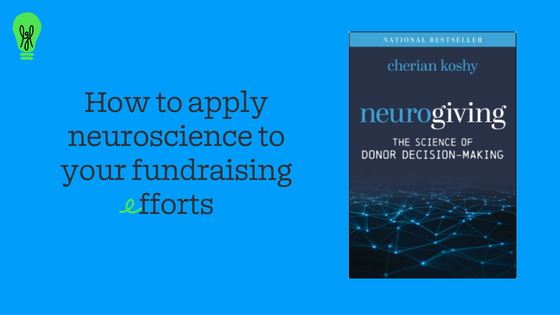
If you’re a fundraiser looking to enhance your work, Neurogiving: The Science of Donor Decision-Making by Cherian Koshy offers valuable insights you can apply to your efforts. In the book, Koshy argues that while fundraising is often seen as the art of touching hearts, it is also very much about engaging brains, and he delves into the neuroscience behind donor decision-making to illustrate this. Some of the examples may surprise you, while others might validate your own instincts. Either way, it’s gratifying to understand the science of why some fundraising techniques yield powerful results while others falter. And, you can apply the research cited in the book to help you fundraise more effectively.
Koshy makes clear that utilizing concepts of neuroscience in fundraising is not a method of manipulation. Rather, fundraisers will only truly see the benefits of this strategy when they “treat donors as people, not ATM machines categorized by age or wealth.” A valuable exercise for you as a fundraiser would be to page through this book while developing or reviewing your fundraising plan. This exercise may validate some of your successes as already demonstrating neuroscience, and provide “ah ha” moments around understanding why some other efforts fell short.
Koshy offers practical implications for fundraisers applicable to each topic covered, including:
– Why you should avoid offering too many choices, which can hinder donor decision-making
– How to craft appeals that strike a balance among emotion, logic, and facts
– The importance of consistency in your communications
– The potential pitfalls of external donor perks, which can cause a donor’s intrinsic interest in your cause to decline
– The power of matching gift opportunities
– Tips for virtual fundraisers and why followup is vital
– Why you should avoid creating a false sense of urgency
Koshy also addresses how organizations can build confidence in a tech-mediated world, and urges fundraisers to “make sure technology augments rather than replaces authentic interactions.”
Conclusion
Koshy doesn’t position this book as a silver bullet for fundraisers. Instead, he acknowledges that “fundraising will always require creativity, adaptability, and yes, sometimes trial and error.” When you read this book as a companion to your fundraising plan, you’ll be able to pinpoint opportunities to apply neuroscience to augment your efforts.

Ready to try LGL? Get your first 30 days free. No credit card required.