
Little Green Light is a cloud-based donor management system for fundraisers.
Subscribe to get our latest product updates, best practices and tips to grow your nonprofit.
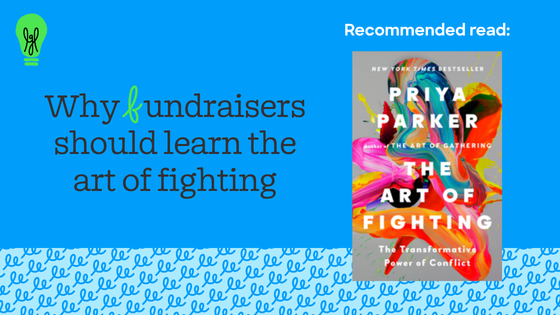
In The Art of Fighting; The Transformative Power of Conflict, author Priya Parker encourages readers to see conflict not as something negative but as “normal, natural, and necessary.” And, when fundraisers learn the art of fighting, they’ll be prepared to navigate conflicts productively.
Despite bringing people together with a shared commitment to a mission, nonprofit organizations aren’t immune to conflict. You might be grappling with a grumpy donor. Maybe you’re facing a disagreement over whether to retire a labor-intensive annual fundraising event, or dealing with a board member whose enthusiastic suggestions aren’t aligned with your mission. Do you tend to see these conflicts as negative interactions to be avoided?
Parker’s perspective and practical recommendations are based on real-life scenarios from her years of conflict management work, and will be helpful to anyone working in a nonprofit organization. The Art of Fighting is divided into three sections: Tear, Grapple, and Cleave.
“Far from being dysfunctional,” Parker writers, “conflict is highly functional. Which is to say, it serves a purpose.” When handled effectively, conflict can strengthen an organization and help the group “figure out who they really are.” For nonprofit organizations, which bring together individuals who care deeply about a shared mission, addressing conflict is essential.
Parker suggests “healthy heat” as an effective and fun way for colleagues and other stakeholders to get used to navigating disagreements together. By intentionally encouraging lively debates over such topics as “What time is the right time for lunch?” and “Is a hot dog a sandwich?” we can build our way to navigating more complicated topics and conflicts.
When handled effectively, conflict can strengthen an organization and help the group “figure out who they really are.” Though it’s natural to want to avoid conflict, Parker asserts that “there is great loss in avoidance.” Instead of avoiding it, she recommends viewing conflict not only as a path to clarity, but as a way of potentially strengthening connections and clarity.
Of course, in order for conflict to serve a productive purpose, you need to address it skillfully—and that gets to the heart of Parker’s book. The first step is to understand the type of conflict you’re facing, and Parker offers a framework for making that determination. By identifying whether you’re facing a “kerfuffle, a hairline fracture, a brawl, or a rift,” you’ll be able to avoid overreacting and underreacting.
Conclusion
Parker’s first book, The Art of Gathering, wasn’t written specifically for nonprofit organizations; but her recommendations offered great ideas that nonprofits could apply to make their events more meaningful. In The Art of Fighting, she once again provides valuable perspective and techniques that can benefit nonprofit organizations and help them through the challenges around conflict that any organization may face.

Ready to try LGL? Get your first 30 days free. No credit card required.